
Industry players believe the new DFI model will be initially risk capital, which will then be used to mobilise additional resources from development agencies such as World Bank.

Contributions made to public funded universities, IITs, national laboratories and autonomous bodies engaged in conducting research in science, technology, engineering and medicine has now been recognised as part of CSR by the government.

For existing technologies, unless appropriate financing is available, deployment at scale is difficult.

The Opposition on Monday charged the government with trying to promote crony capitalism, creating fear by giving "unbridled power" to taxmen, trying to snoop into people's lives through increased use of Aadhaar through the provisions of the Finance Bill.
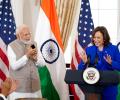
US Vice President Kamala Harris said India's history and teachings have influenced and shaped the world, asserting the country has inspired millions of people through its philosophy.

There are various estimates of India's debt to GDP ratio, but the consensus is that that it would be over 80 per cent at the end of the current fiscal year.
.jpg)
The NPAs of banks stood at over Rs 3 lakh crore as on December 2014.
Control over PSU banks is what is allowing the government to drive this scheme.

It could be a matter of concern that foreign shareholders of the NSE are registered in tax havens such as Mauritius and Cyprus.

There are lessons for the Congress to learn from the Karnataka elections of how burying the hatchet among top leaders and not washing dirty linen in public can help, says Ramesh Menon.

State Higher and Technical Education Minister Chandrakant Patil also said that the government will introduce four-year degree courses from June 2023 as mandated under the National Education Policy and the universities will have to implement the decision.

After a hiatus of nearly two decades, the government's programme to privatise state-owned firms restarted with the handing over of debt-laden national carrier Air India to the Tata Group. With the new owner shelling out Rs 18,000 crore for the buyout of the 'Maharaja', this would be the highest-ever amount garnered through privatisation, and is even more than the cumulative sum mopped up through strategic sales from 1999-00 to 2003-04. The government had in October last year inked the share purchase agreement with the Tata Group for sale of national carrier Air India for Rs 18,000 crore. Tatas would pay Rs 2,700 crore cash and take over Rs 15,300 crore of the airline's debt.
Merely bringing down the government stake below 51% may not find any taker for the PSBs. The government must bring down its holding to at least 26%, recommends Tamal Bandyopadhyay.

Will G20 showcase an India that is inclusive, culturally rich, diverse and tolerant, asks Ramesh Menon.

The finance minister chided the central bank on Tuesday over its focus on fighting inflation, saying the Reserve Bank of India (RBI) also needed to abide by the government policy to promote economic growth.

Hospitals empanelled for Modicare may give preference to poor patients over the middle class for fear of strict government action, says Harsh Roongta.

The global turmoil in the banking sector has made analysts cautious, who advise that investors stay away from stocks of this sector till the overall sentiment improves. The recent trouble for the banking sector started with the collapse of US-based Silicon Valley Bank (SVB), Silvergate Capital and Signature Bank. On its part, Moody's Investors Service has also cut its outlook for the US banking system to 'negative' from 'stable', citing the run on deposits at these three banks that led to the collapse of these banking majors in less than a week.

'For a responsible person like him to utter such nonsense is shameful.' 'He is not fit to be a director on the RBI central board.'

The ripples from November 8 may be seen in next year's state budgets.

Of the three major Budget announcements related to the banking sector, privatisation of PSBs is the most audacious, says Tamal Bandyopadhyay.

India's dream to be in the forefront of international politics has come true. India has placed itself firmly as a major player in the shaping of a new world order, observes Ambassador T P Sreenivasan.

'An area of land has already been earmarked for their protected habitation.' 'There are also steps being taken to take care of the coral zone and mangroves.'

Senior bureaucrats say the government has planned a 'feel-good' Budget after the 'pain' of demonetisation.

The government will find it difficult to pass the Bill without the Congress's help

In the midst of third wave of COVID-19, Finance Minister Nirmala Sitharaman has come up with an impactful Budget which is balanced, fiscally prudent and growth-oriented, the USA India Chamber of Commerce has said. President of the Boston-based USA India Chamber of Commerce (USAIC) Karun Rishi, however, said it is a matter of concern that the budget lacks tangible measures to increase revenue generation. "Opting to keep the fiscal deficit at 6.9 per cent and increase capital expenditure by 35 per cent is a masterstroke. "The annual budget estimates the effective capital expenditure of Rs 10.68 lakh crore in 2022-23, making up about 4.1 per cent of the GDP," he said. "A phenomenal increase in the government's capital expenditure is likely to facilitate the expenditures on infrastructure and create jobs.
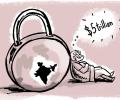
It would be a difficult task for the Indian economy to reach the $5-trillion mark a year before the International Monetary Fund (IMF) projection of 2026-27. Pankaj Chaudhary, minister of state for finance, said in the Rajya Sabha on Tuesday that the government is taking steps to make the country a $5-trillion economy at a date earlier than the IMF's projection. In that context, it would not be difficult to meet the projection in the third quarter of FY27.

With the new owner shelling out Rs 18,000 crore for the buyout of 'Maharaja' this would be the highest ever amount garnered through privatisation or even the cumulative sum garnered through strategic sale in 1999-00 to 2003-04. The government had garnered roughly over Rs 5,000 crore during that five-year period by privatising 10 CPSEs.

A paper authored by Rajan said, state-linked banks can be a first step in altering the ownership structure of some PSBs, where the government brings down its stakes to below 50 per cent, creating distance from operations of banks, and improving governance along the way.

India will require a total investment of $10.1 trillion to achieve net-zero emissions by 2070, while the nation could face a shortfall of $3.5 trillion, a study by CEEW Centre for Energy Finance (CEEW-CEF) said. At the recently concluded COP26, Prime Minister Narendra Modi announced India's aim to achieve net-zero emissions by 2070. "India would need cumulative investments of $10.1 trillion to achieve net-zero emissions by 2070, according to an independent study released today by the CEEW Centre for Energy Finance (CEEW-CEF)," a statement said.

'There are many things we need to work on.' 'At the heart of it is, one, the extent of inequality, which is not good for democracy and nation; two, a structural decline on how a country ought to function, how people should be held accountable, whose role is what.'

Nothing, according to Deepak Lal. He argues that the contemporary attempts to control immigration in the US and UK are not nativist.

Expenditure on health in India is at a global low of 1.2% of GDP.

Employees across segments, including those involved in specialised jobs such as technology, compliance and risk management, have started leaving the bank fold in hordes, observes Tamal Bandyopadhyay.
'The Budget numbers presented severely underestimate the magnitude of the unstated fiscal crisis that we went through in 2018-2019, which cannot be conceivably be fully reversed in 2019-2020,' points out Rathin Roy, director, National Institute of Public Finance and Policy.

Without bringing sound governance and technical capabilities into the RBI's work, injecting new money sets the stage for a next wave of bad behaviour by banks, warns Ajay Shah.

Over 15 years, with seven per cent growth, the Indian economy will be three times bigger.
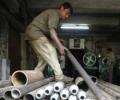
The government is by far the largest employer; job security is guaranteed for government employees, and their wages are set through once-in-10-year Pay Commission.

Addressing the 74th Annual General Meeting of the Indian Banks' Association (IBA), she said the industry needs to imagine how Indian banking has to be in the immediate and long-term future. As far as the long-term future is concerned, she said it is going to be largely driven by digitised processes and there is a need for seamless and interconnected digital systems for a sustainable future for the Indian banking industry.

Corporate India at present is more indebted than all state govts put together.
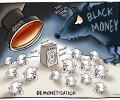
Months before 8/11, MP, Haryana probed note ban
